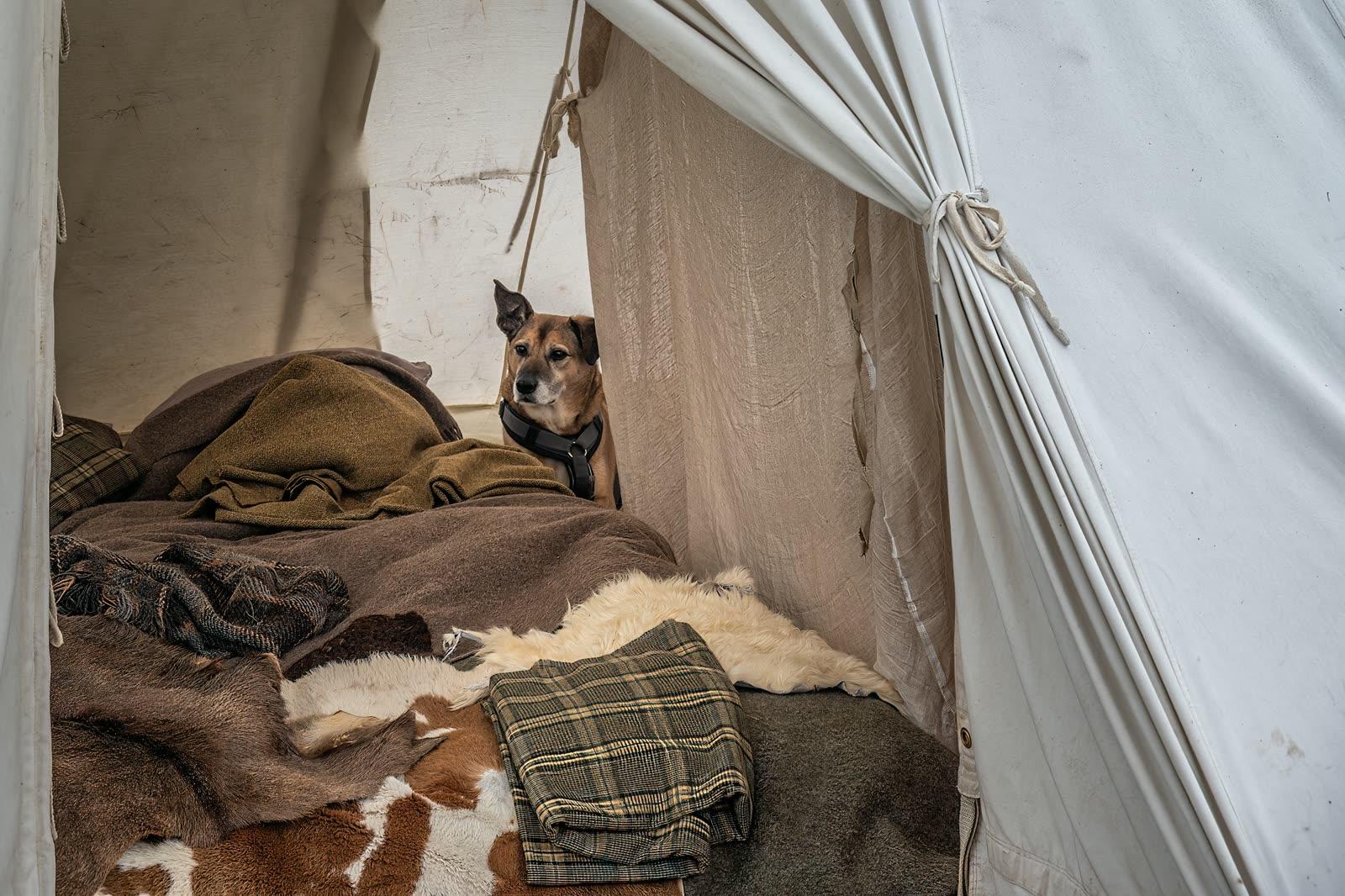
Before you book
- Read the campground's pet rules in writing: many require a leash of a set length at all times, limit the number of dogs, or ban dogs from some sites, trails and beaches.
- Check whether the park needs proof of vaccinations, and carry a copy.
- Ask your veterinarian about anything health-related for the trip, including ticks and other parasites in the area you are visiting.
- Pick a site with shade, and not next to the busiest path, if your dog is reactive to passers-by.
Setting up camp
- Set up the dog's spot first, before the tent, so it has somewhere to be while you work.
- Give it a place off cold or wet ground, such as a raised cot or a thick pad, with something from home on it that smells familiar.
- Keep the leash or a tie-out within the campground's rules, and never long enough to reach the fire or the road.
- Put the water bowl in the shade and refill it more often than you would at home.
The first night
- Feed at the usual time, then a calm walk around the site so the new sounds and smells are not a surprise later.
- Most dogs settle better inside the tent or vehicle with you than outside on their own.
- Bring a layer for the dog if night temperatures will be low, and plan for heat if they will be high.
- Keep food and bowls packed away overnight so they do not draw wildlife.
Packing up and the drive home
- Brush the dog and shake out its bedding before it gets in the car.
- Put a cover or an old towel on the seat for the drive back; camp dirt and damp fur end up in the fabric otherwise.
- Air the car out at home and wash the bedding the same day (see our guide to getting dog smell out of a car).
A kit for the campsite
Our Camp Night Kit pairs a raised dog cot with a sherpa-backed blanket. It goes on sale when both makers have confirmed price and delivery.
This guide is general advice, not veterinary or safety guidance. Nothing on this site is a restraint or a safety device.