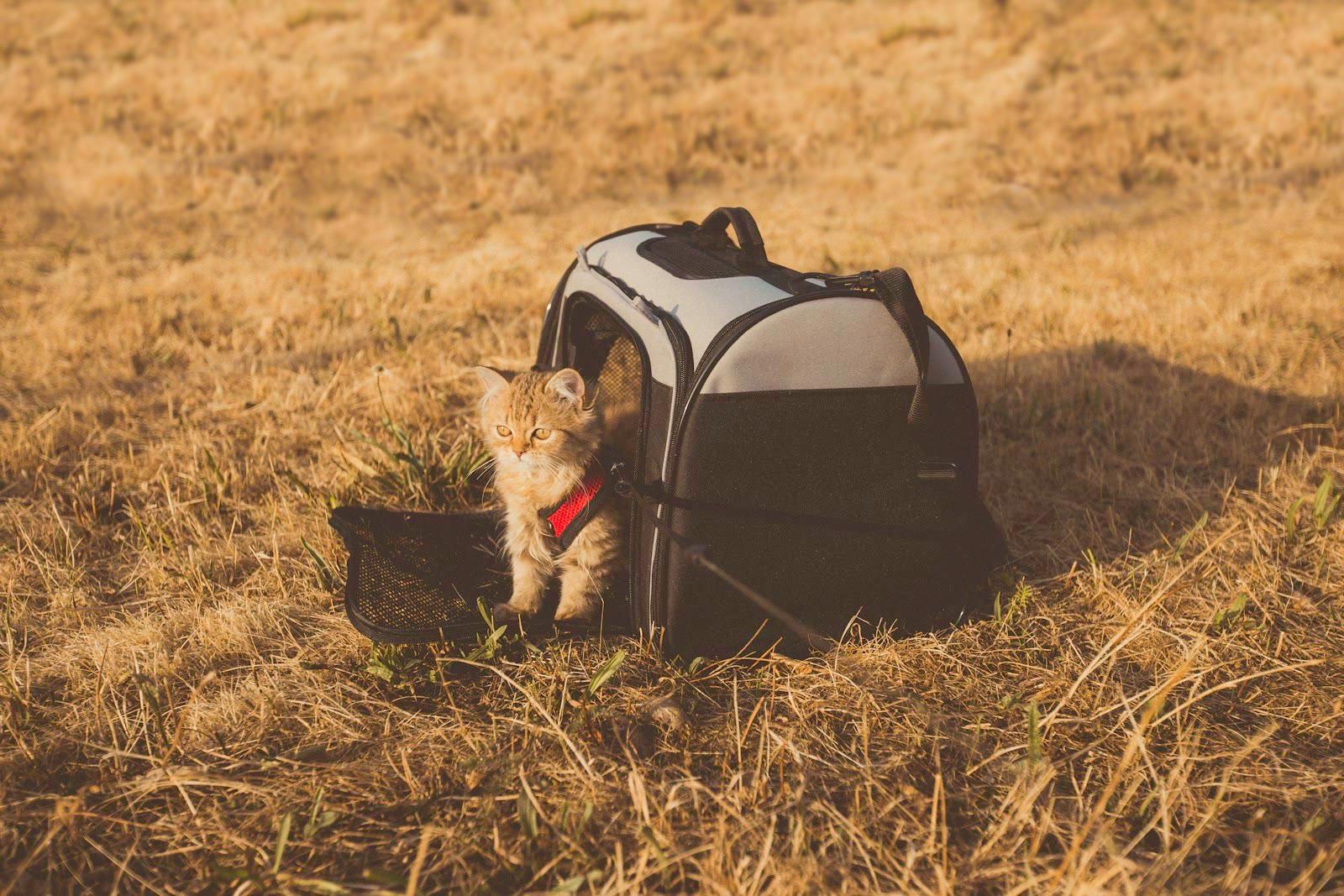
Make the carrier familiar first
- Choose a well-ventilated carrier big enough for your cat to stand, sit, lie down and turn around.
- Leave it open in a room your cat uses, with a familiar blanket inside, days or weeks before the trip.
- Put treats or meals in it so going in becomes part of the day, not a sign that something is about to happen.
- Once your cat walks in on its own, close the door for a few minutes, then pick the carrier up and carry it around the house.
Practise with short drives
- Carry the cat in its carrier to the car and sit there with the engine off, then go back inside.
- Next time, the same with the engine running. Then a drive around the block and home again.
- Reward your cat after each step, and make the trips a little longer each time. If one goes badly, go back to the last step that went well.
In the car
- Secure the carrier so it cannot slide or tip: with a seat belt through its handle or strap, or wedged on the floor behind a front seat.
- Keep your cat in the carrier for the whole drive. If it has to come out at a stop, close every door and window first and use a harness and leash.
- A towel over part of the carrier gives your cat somewhere to tuck out of sight; keep the front open for air.
- Keep the car cool and never leave your cat alone in a parked car, even for a few minutes.
Water, food and litter on a long drive
- Ask your veterinarian about feeding before the trip. VCA's veterinarians suggest skipping breakfast on travel day and offering a small meal when you arrive.
- Offer water at each stop, with the doors closed, and bring water from home.
- Line the carrier with an absorbent pad, and pack spare pads, paper towels, gloves and plastic bags.
- On a drive of several hours, bring a small pan and some of your cat's usual litter and offer it at stops. Some cats will not use it until they arrive.
Papers and ID
- A collar tag with a cell number that works on the road, and microchip details that are up to date.
- A copy of the rabies vaccination record for trips across state lines; check whether the state you are going to needs a health certificate.
- If you stay overnight, confirm in writing that the hotel accepts cats.
When to call your veterinarian
Most cats travel without medication. If yours struggles on every trip, or before a long journey such as a move, ask your veterinarian for a travel plan. Vets can prescribe medication for travel, and it is usually tried at home first. Never give your cat human medicine, or any remedy, without your veterinarian's advice.
A kit for the clean-up after an accident
Our Car Clean-Up Kit puts a large and a pocket-size pet odor spray together with a charcoal bag for under the seat. It goes on sale at launch.
This guide is general advice, not veterinary or safety guidance. Nothing on this site is a restraint or a safety device.