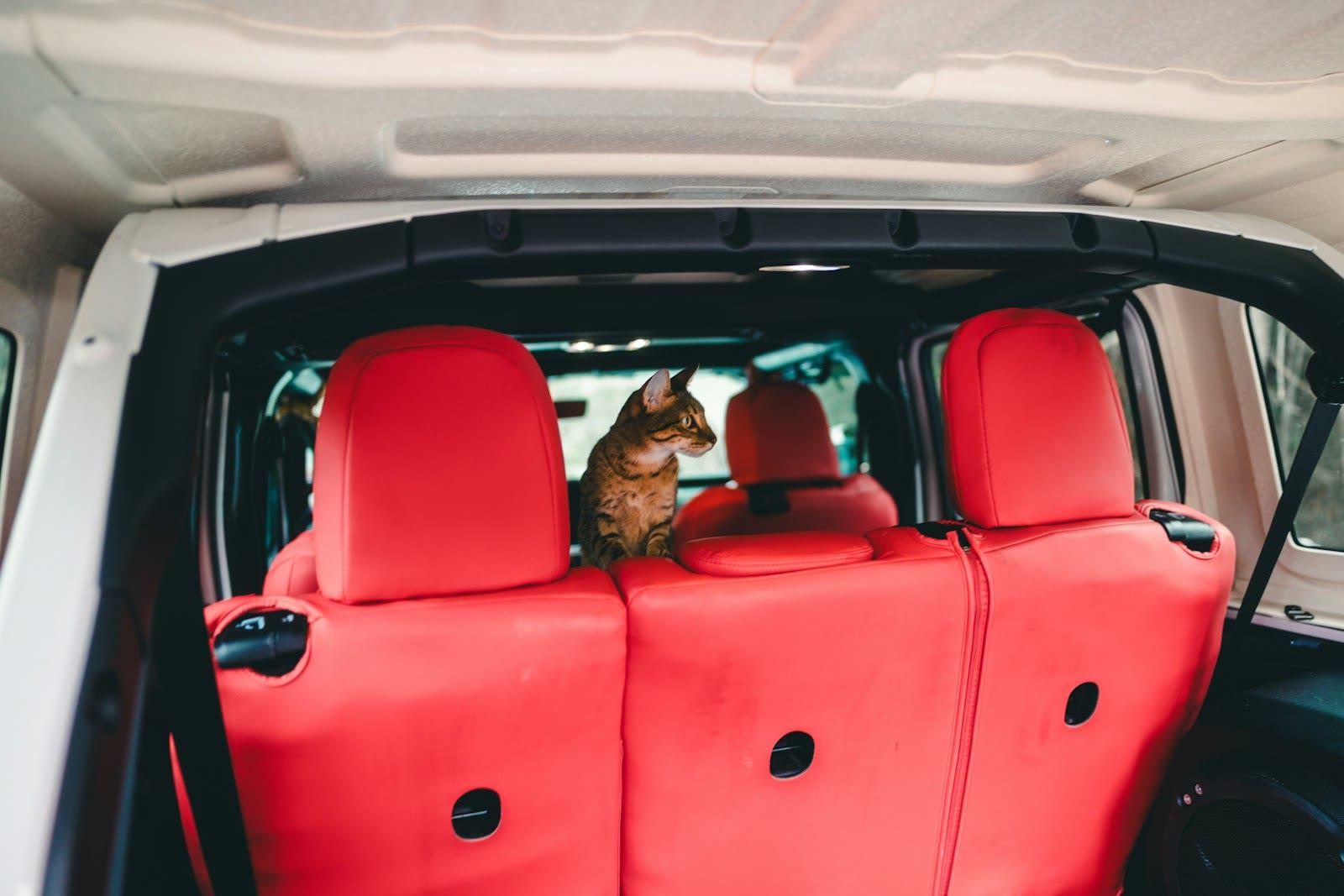
Find all of it
- Pull over somewhere safe before you deal with it.
- Check the carrier and its pad, the seat under it, the seat crease, the floor mats and the carpet under the mats.
- Dried urine can be hard to see and still smell. An ultraviolet flashlight in a dark garage helps find old spots.
Step by step
- Blot up as much as you can with paper towels, pressing down. Rubbing spreads it and pushes it deeper.
- Take out the mats, the carrier pad and any cover or blanket, and wash what is washable following its care label. Let fabrics air-dry; a hot dryer can lock the smell in.
- Test your cleaner on a hidden spot of the same material first, and check its label for surfaces it should not be used on.
- Use a cleaner made for pet urine, such as an enzyme cleaner. Apply enough to reach as deep as the urine went, leave it for the time the label gives, then blot.
- Skip ammonia-based cleaners. Urine already smells of ammonia, and they can draw a cat back to the same spot.
- Skip steam and heat, which can set the stain and the smell.
- Dry the car with the windows down. Repeat the treatment if the smell comes back as it dries; thick seat cushions often need more than one round.
Leather and the carrier
- Leather and vinyl: wipe it up quickly and clean as the car maker's care instructions say. Urine that reached the seams or perforations may need a detailer.
- Plastic carriers: take them apart and wash every part with mild soap and water, then rinse and dry.
- Soft carriers: follow the maker's washing instructions, and line the carrier with an absorbent pad next time, with a spare in the car.
If the smell will not go
- A second or third application, with full drying in between, reaches what the first did not.
- A professional interior detail with a hot-water extractor reaches deeper than home cleaning. Tell them it is cat urine.
- A charcoal bag under the seat takes up leftover odor without adding a scent while you work on the source.
When your cat keeps soiling
One accident in a carrier on a long drive is different from a cat that keeps going outside its litter tray. If it keeps happening, take your cat to a veterinarian before treating it as a behavior problem: bladder infections, urinary tract disease, kidney disease and diabetes can all cause it, and cats do not always look sick. A cat, especially a male cat, that strains and cannot pass urine needs a veterinarian immediately.
A kit for the smell left in the car
Our Car Clean-Up Kit puts a large and a pocket-size pet odor spray together with a charcoal bag for under the seat. It goes on sale at launch.
This guide is general advice, not veterinary or safety guidance. Nothing on this site is a restraint or a safety device.